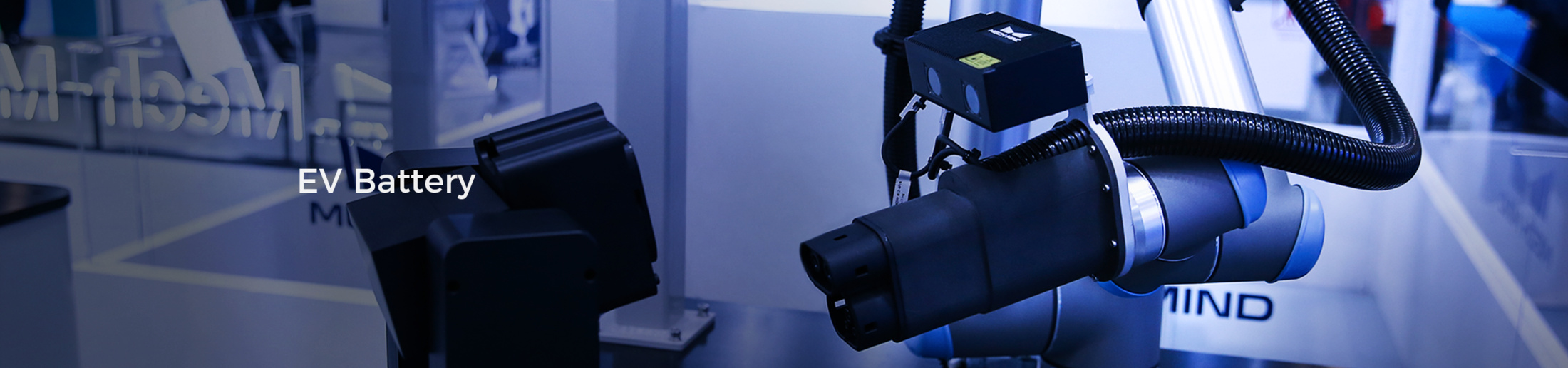
Large new-energy company
AI + 3D Vision-Guided Depalletizing of Battery Cells
Customer Demand
Mech-Mind General-Purpose "Eye + Brain" for Robots
 Project Site
Workflow:
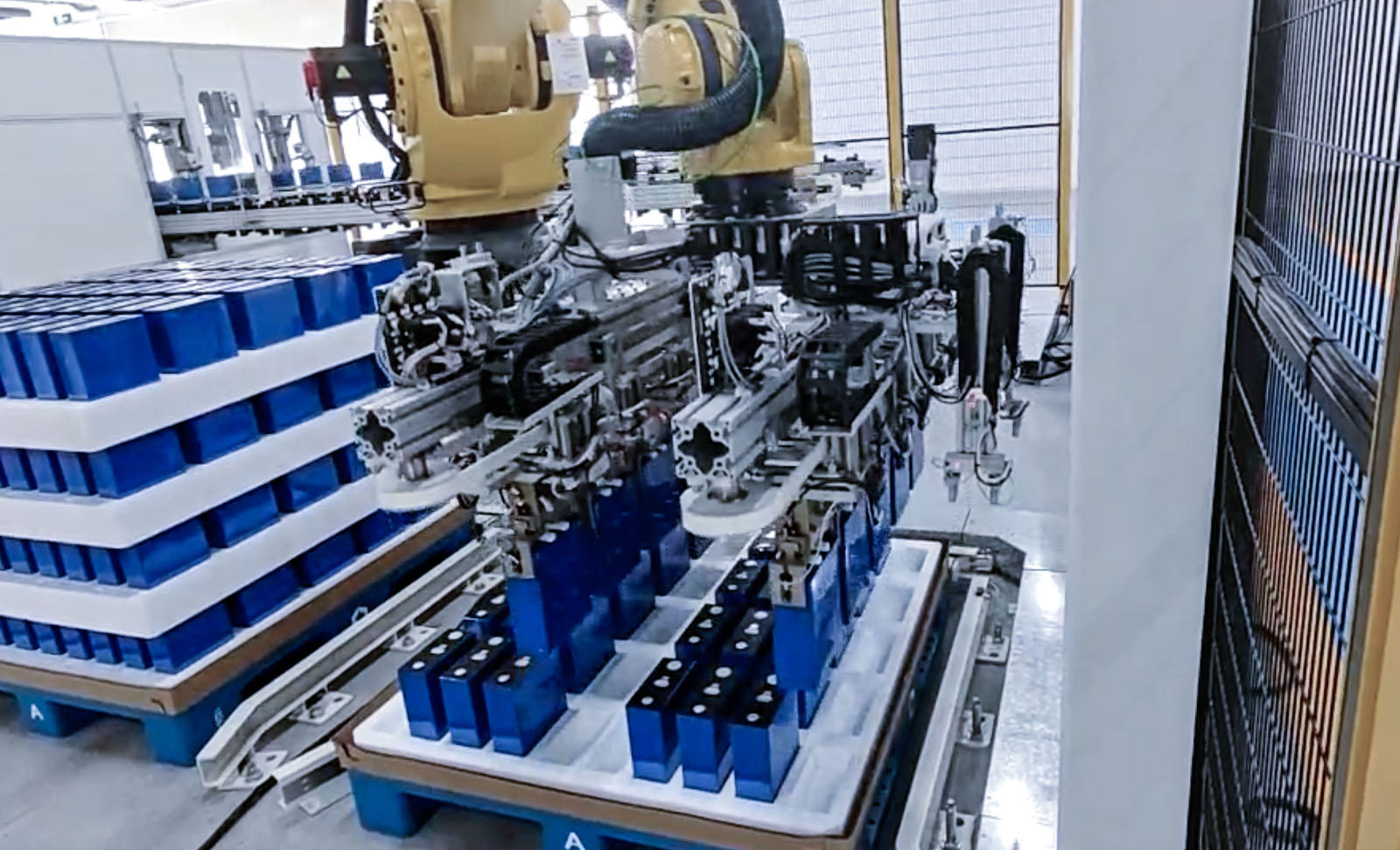
Mech-Mind's “Eye + Brain” solution (including high-precision 3D cameras and AI software suites) equips robots to autonomously locate battery cells and empty trays, verify cell pose, plan collision-free pick paths, and perform stable, high-speed feeding. The system is engineered for seamless integration with robots and conveyors to maintain material flow and match line cycle requirements.
Advantages:
-
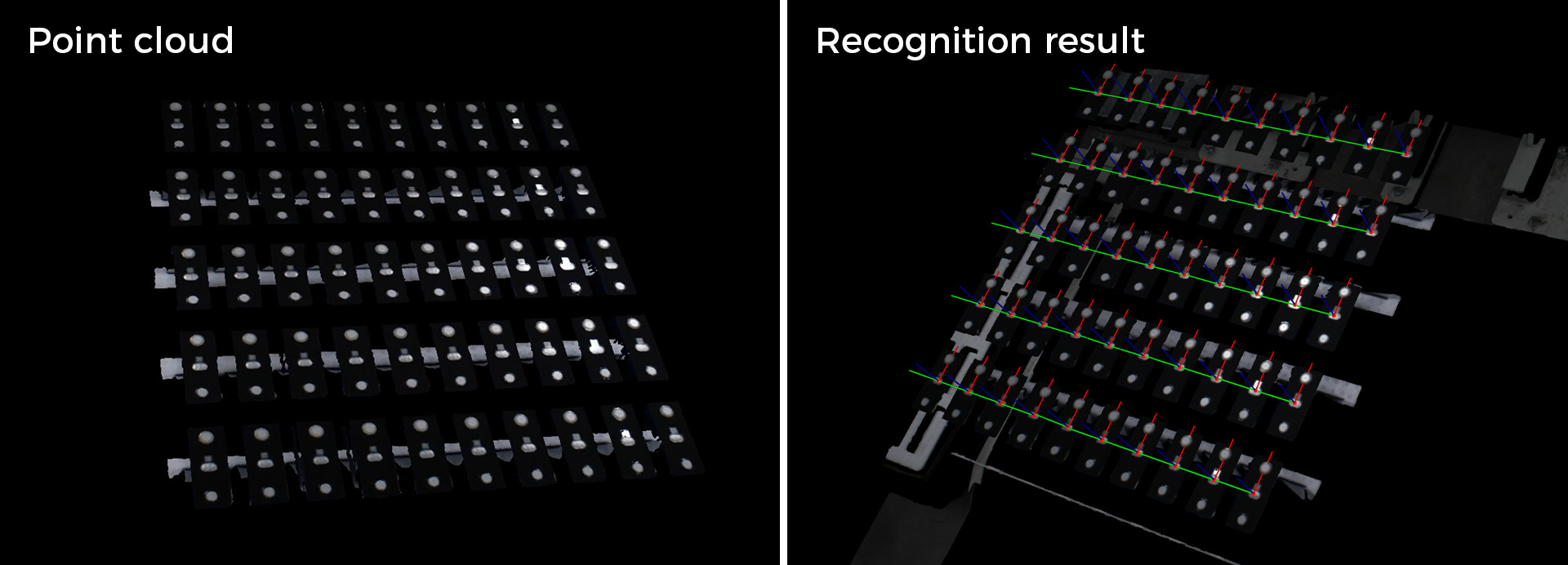
The Mech-Eye LSR XL-GL 3D camera (ETH) and Mech-Eye LSR L-GL 3D camera (EIH) together capture fine-detail, high-quality 3D point clouds of battery cells.
-
Deliver ultra-high resolution and a wide scanning range, with superior resistance to reflections and ambient light.
-
Handle reflective surfaces and complex structures effectively, reducing rework.
-
Provide a working distance of over 3 m, enabling safer and more flexible robot operation without sacrificing accuracy.
-
Precisely recognize white trays with grooves, enabling robust pick-and-place.
-
Integrate built-in AI path-planning and collision-detection algorithms for safer, faster motions.
-
Guide robots to pick two entire layers from a large tray, increasing throughput.
-
Offer easy installation and versatile deployment—generalize across multiple cell specifications to support rapid production-line changeovers.
Results:
-
Stabilized cycle times and improved pick accuracy.
-
Increased throughput and minimized idle time.
-
Enabled fast deployment and shorter changeovers.
-
Achieved highly efficient, flexible, and intelligent production.