How Robot Systems Power Sustainable, Low-Carbon Manufacturing
Over the past few years, global manufacturing has accelerated its move to low-carbon, environmentally responsible production . Sustainable manufacturing has moved beyond a concept into concrete, measurable practices. Today, manufacturers must do more than increase output—they are expected to optimize energy use, improve material efficiency, and maintain long-term production stability.
Robot systems play a critical role in this transition as foundational elements of industrial infrastructure . By tightly integrating perception, decision-making, and execution, robots provide a higher level of process control and operational stability in complex and dynamic manufacturing environments. This system-level capability allows robots to go beyond traditional automation, becoming a reliable foundation for translating sustainability goals into practical, repeatable manufacturing outcomes.
The Shift Toward Sustainable Manufacturing: From Automation to Systematic Waste Reduction
At the production level, the core challenge of sustainable manufacturing is not whether a single operation is efficient, but whether the overall process contains long-term, structural sources of waste . The value of robotic automation lies in continuously reducing this uncertainty. By improving operational consistency and process controllability, robot systems help minimize hidden resource consumption caused by misoperation, unstable takt times, and quality variation.
When robots are equipped with stable 3D perception, intelligent decision-making, and reliable end-effectors , production processes can be kept within predictable and optimizable operating ranges. This system-level control enables manufacturers to reduce energy and material input per unit while maintaining throughput and quality , turning waste reduction from a one-time improvement into a scalable and sustainable production capability.
What Robot Systems Enable in Green Manufacturing Scenarios
With green and sustainable objectives becoming increasingly central to manufacturing, robot systems are playing a more direct role across industrial production. Their core value lies in continuously optimizing how energy and materials are used throughout the production process . By improving operational precision, execution stability, and process controllability in complex manufacturing environments, robots help manufacturers lower unnecessary resource consumption and environmental impact while preserving productivity and quality.
1. Reducing Material Waste and Scrap
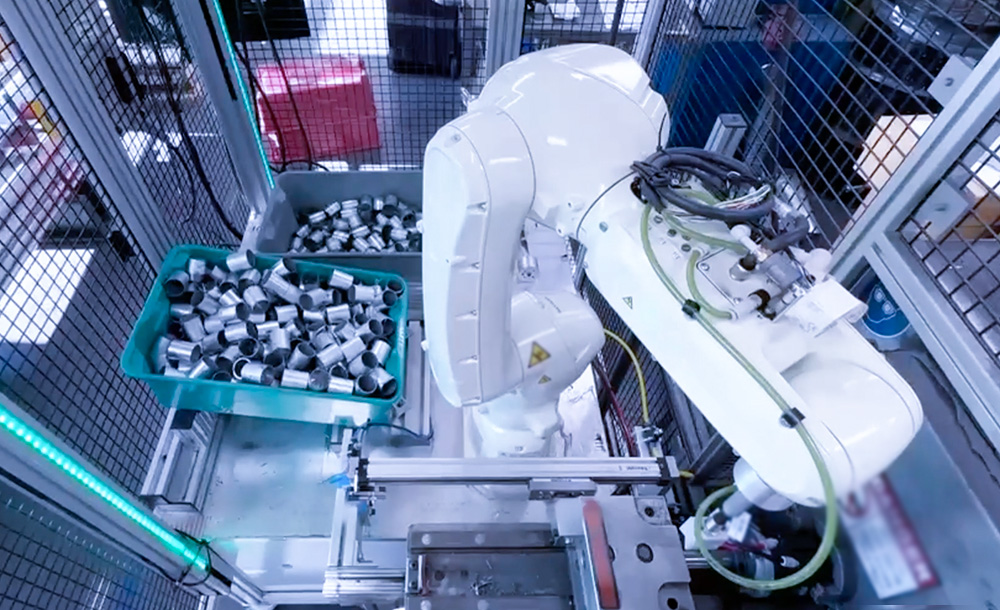
In industries such as automotive, logistics, and electronics, picking, assembly, and loading/unloading operations often involve parts with complex geometries and significant batch variation. Inaccurate recognition or unstable execution can directly lead to part damage, assembly failure, and scrap—amplifying material waste. By reliably capturing thetrue 3D shape and spatial position of parts , robots can assess task feasibility before execution, reducing losses caused by failed grasps, misalignment, or collisions.
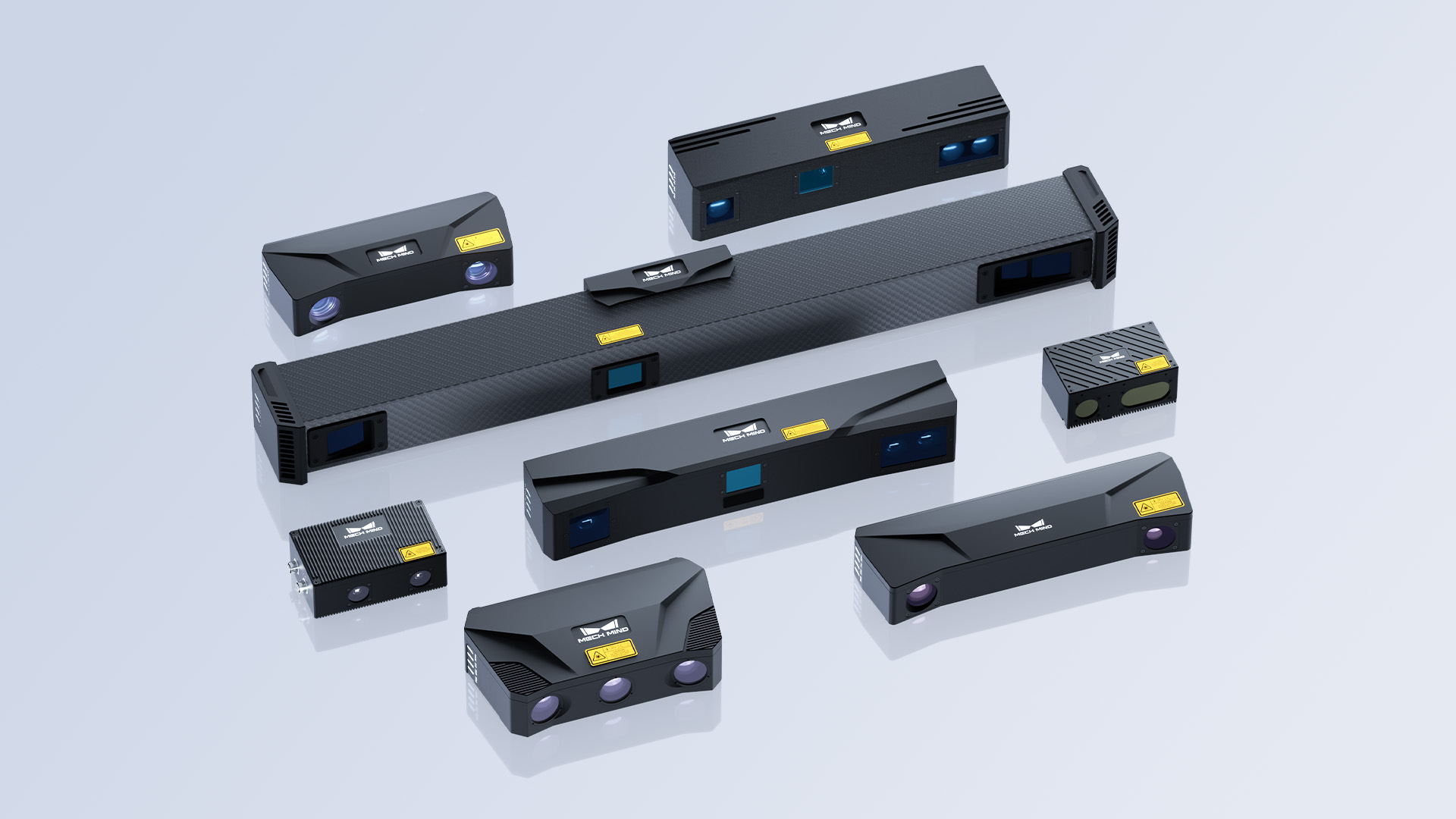
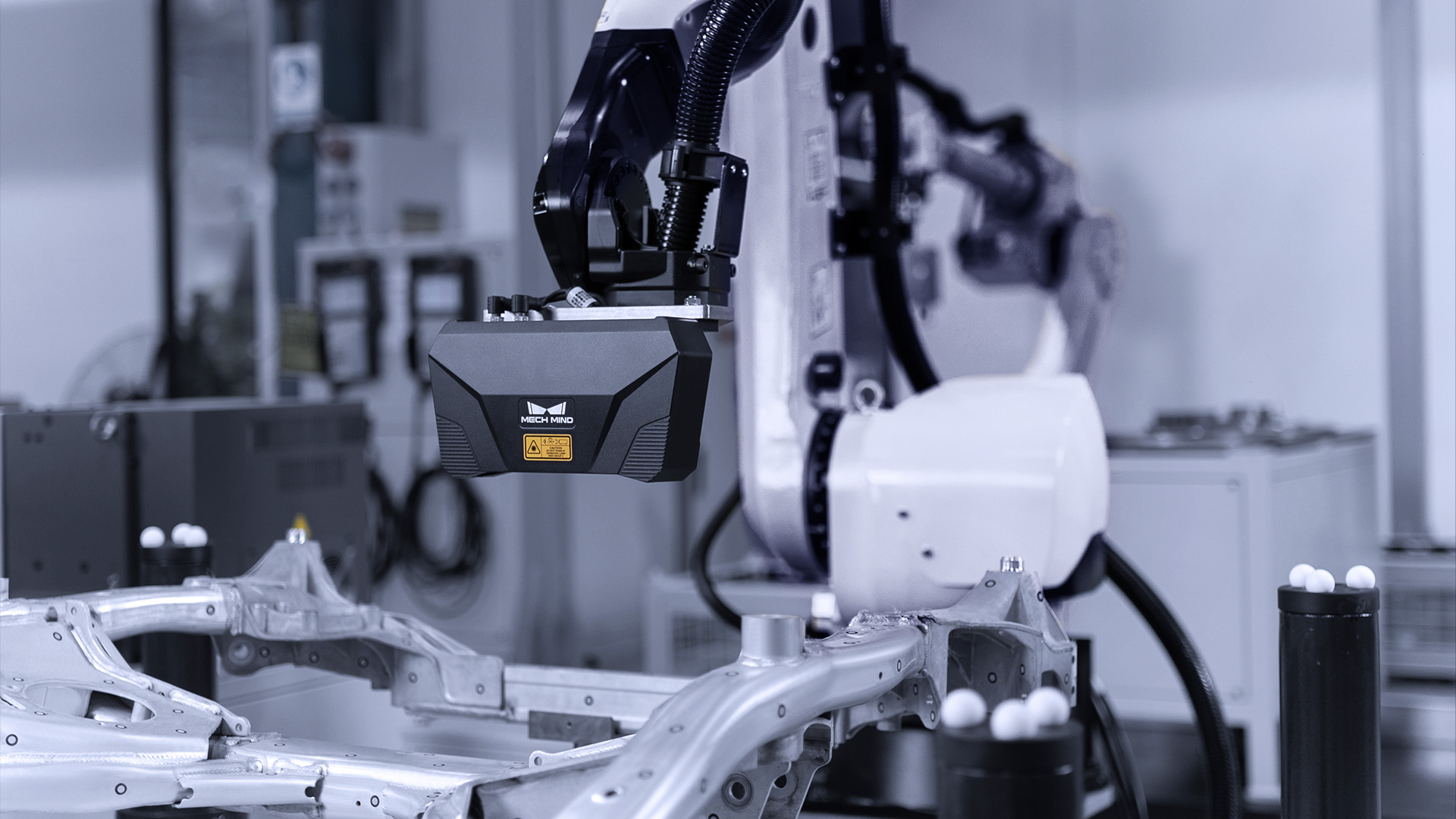
In practical applications, the industrial-grade 3D imaging capabilities of Mech-Eye high-precision 3D cameras provide robots with a reliable data foundation, enabling consistent operation in complex scenarios. Reducing material waste ensures that the energy and resources invested in upstream processes are converted into effective output, making this one of the most direct and easily quantifiable improvements in green manufacturing .
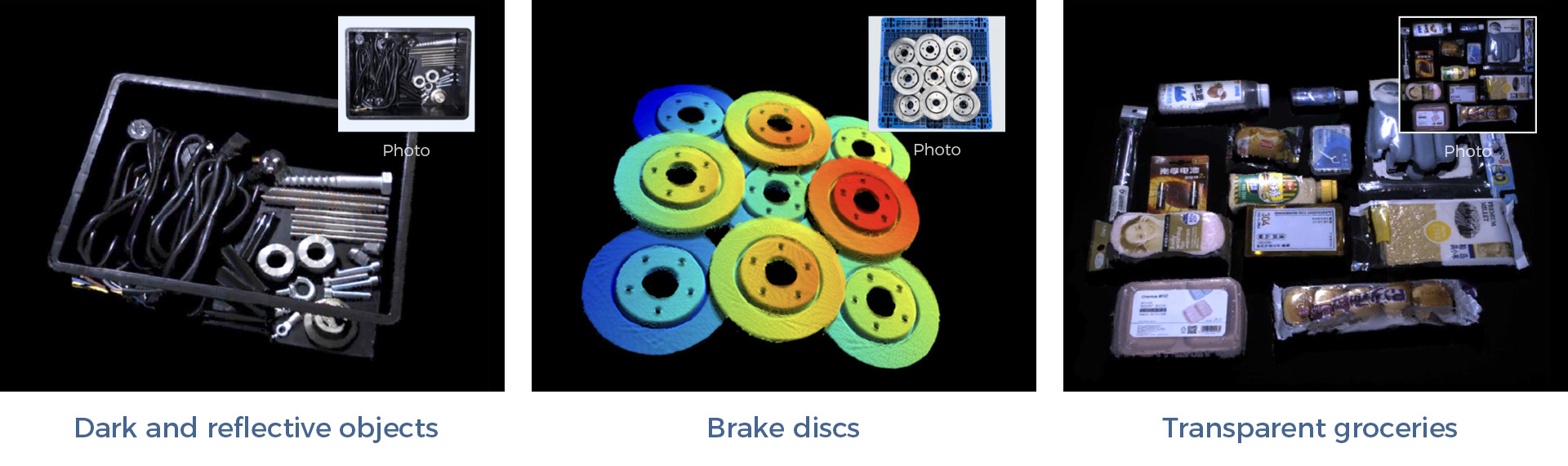
High-quality 3D point clouds generated by Mech-Eye 3D cameras
2. Motion Optimization for Energy Efficiency
In high-throughput production and large-scale logistics scenarios, energy consumption depends not only on output volume but also on whether each robotic movement is necessary and efficient . Redundant motion, idle running, and repeated adjustments can accumulate into substantial energy consumption over time. By dynamically planning grasp poses and motion paths based on actual part conditions , robots can complete the tasks with fewer movements and shorter travel distances.
Tools such as Mech-Viz Robot Programming Software provide practical ways to implement motion optimization, allowing robots to continuously reduce non-value-added movements without affecting takt time or throughput. Consequently, energy consumption per unit becomes more stable and controllable , aligning closely with the core energy-efficiency goals of sustainable manufacturing.
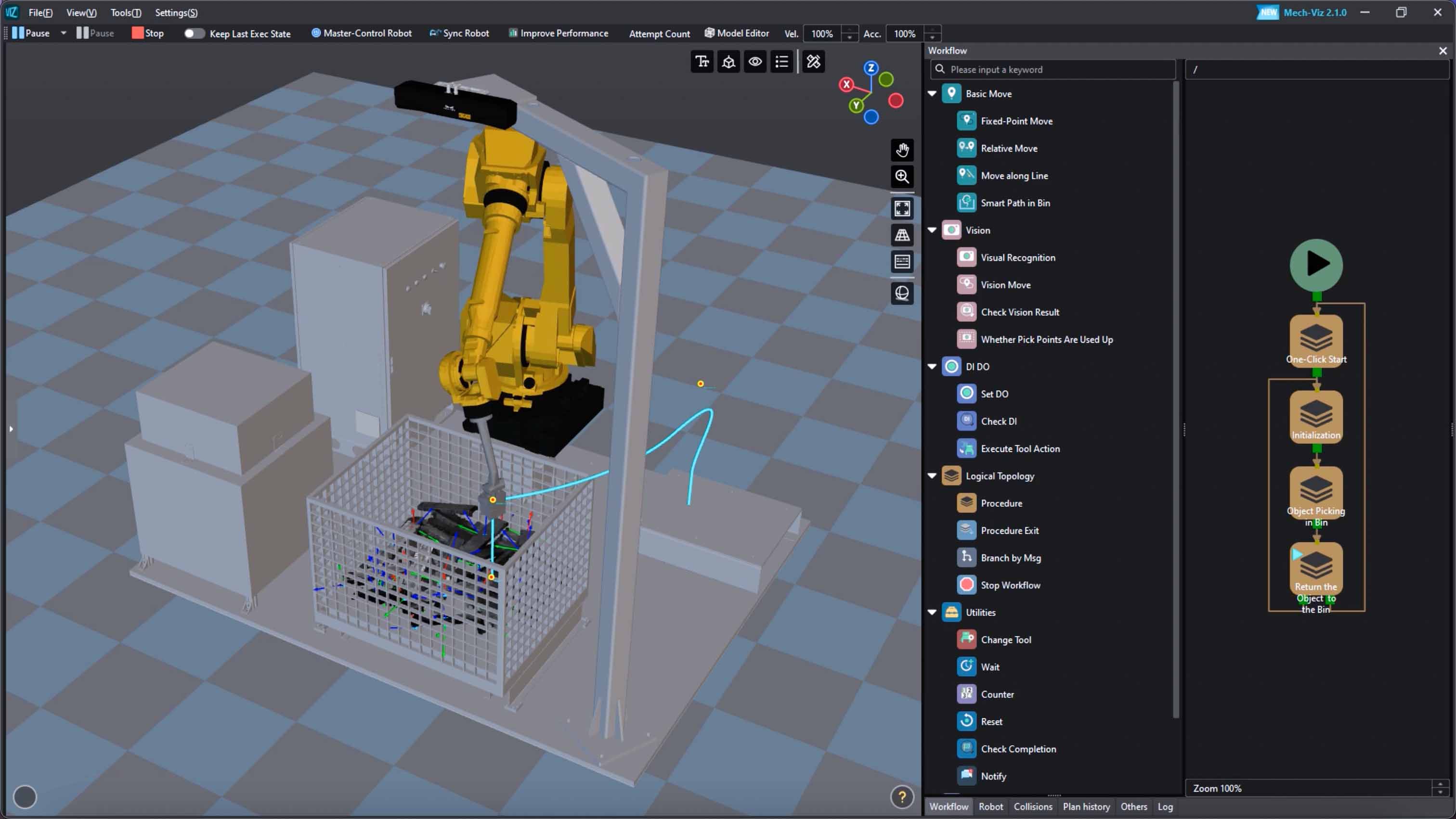
Mech-Viz can predict potential collisions and optimize the motion trajectories of robots.
3. Improving Operational Stability to Minimize Systemic Waste
In discrete manufacturing and flexible production lines, instability often triggers cascading issues such as frequent stoppages, recalibration, and manual intervention. These issues not only impact delivery performance but also introduce additional energy use and time costs . A robot’s ability to adapt to part variation and environmental change directly influences the overall stability of the production system.
By incorporating deep learning software such as Mech-DLK , robots are better equipped to handle parts with large appearance variation, unstructured placement, or complex features, reducing operational fluctuations caused by changing scenarios. This stable operational performance helps minimize hidden resource waste and forms a critical foundation for sustainable manufacturing.
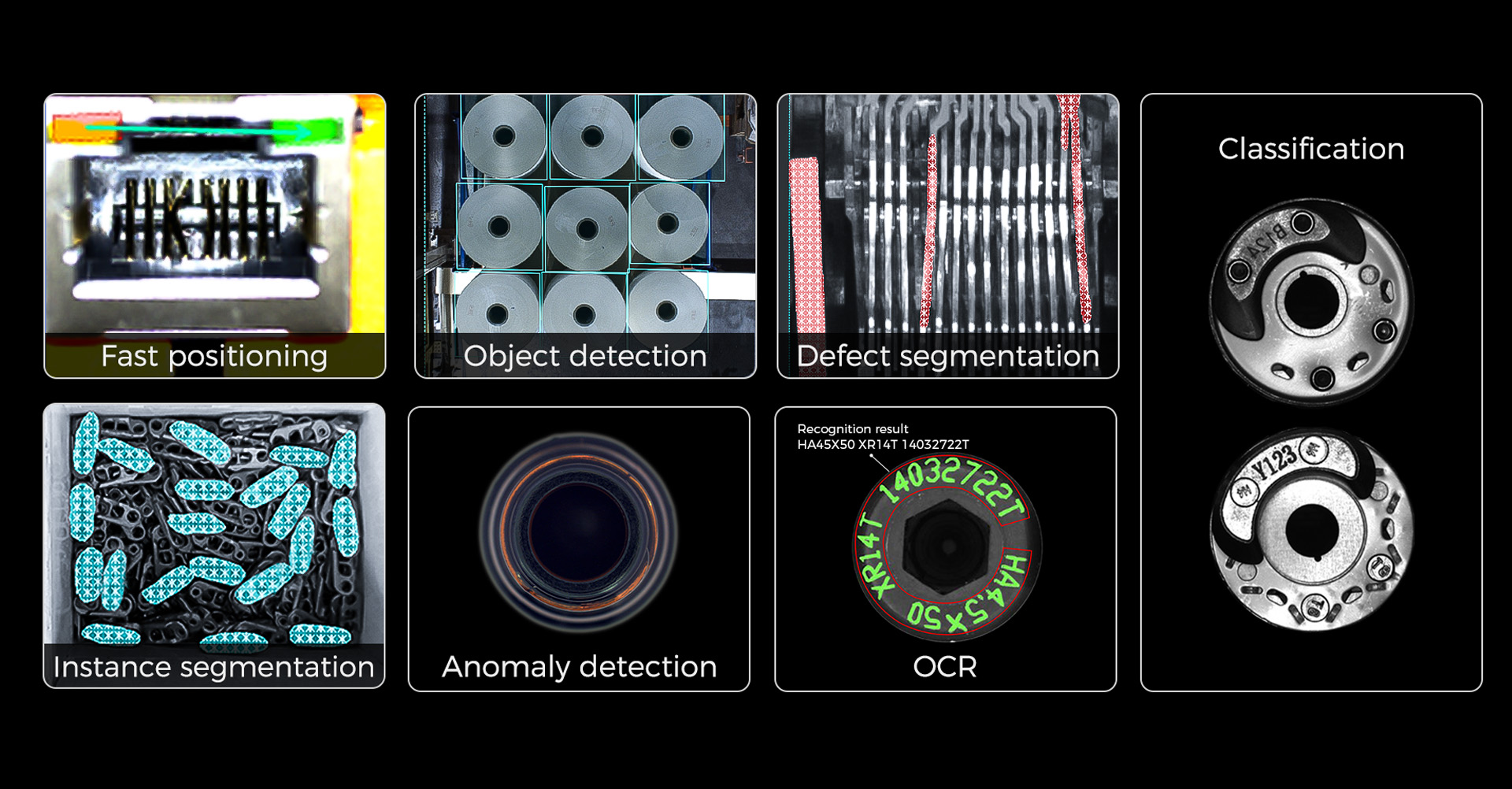
Powered by robust AI algorithms, Mech-DLK enables rapid model training and reliable performance in even the most demanding applications.
4. Upstream Quality Control to Eliminate Rework
Within a green manufacturing framework, quality failures mean that materials, energy, and labor have already been consumed without producing effective output . Traditional inspection is often concentrated at the end of the line, leading to rework and repeated processing. Continuous part state acquisition during production allows robots to introduce quality control earlier .
With the support of Mech-MSR 3D Measurement and Inspection Software , key dimensions and assembly conditions can be verified in real time, enabling deviations to be corrected at an early stage. This reduces the extra resource consumption associated with rework and repeated processing , making quality management a direct driver of green manufacturing.
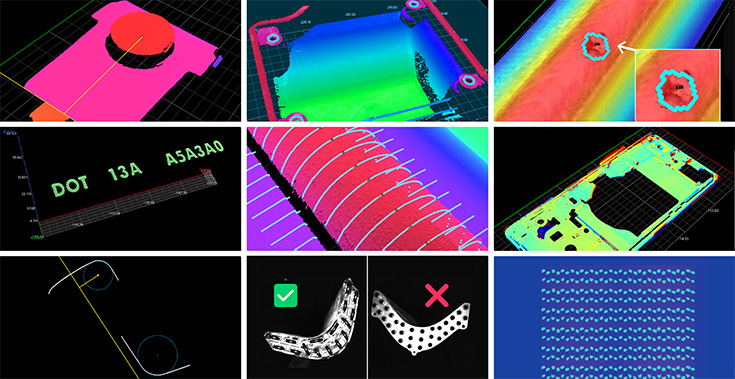
Mech-MSR supports a wide range of 2D and 3D quality inspection applications.
5. Reducing Reliance on Environmental Controls to Cut Auxiliary Energy Use
In factory operations, energy consumption is not limited to production activities alone, but also includes environmental support systems such as lighting and air conditioning . Supported by stable perception and execution capabilities , robot systems can operate reliably under low-light conditions and with reduced environmental intervention, lowering dependence on environmental controls.
This reduced reliance on environmental conditions helps reduce non-productive energy use and provides a practical pathway toward low-carbon, sustainable factory operation.
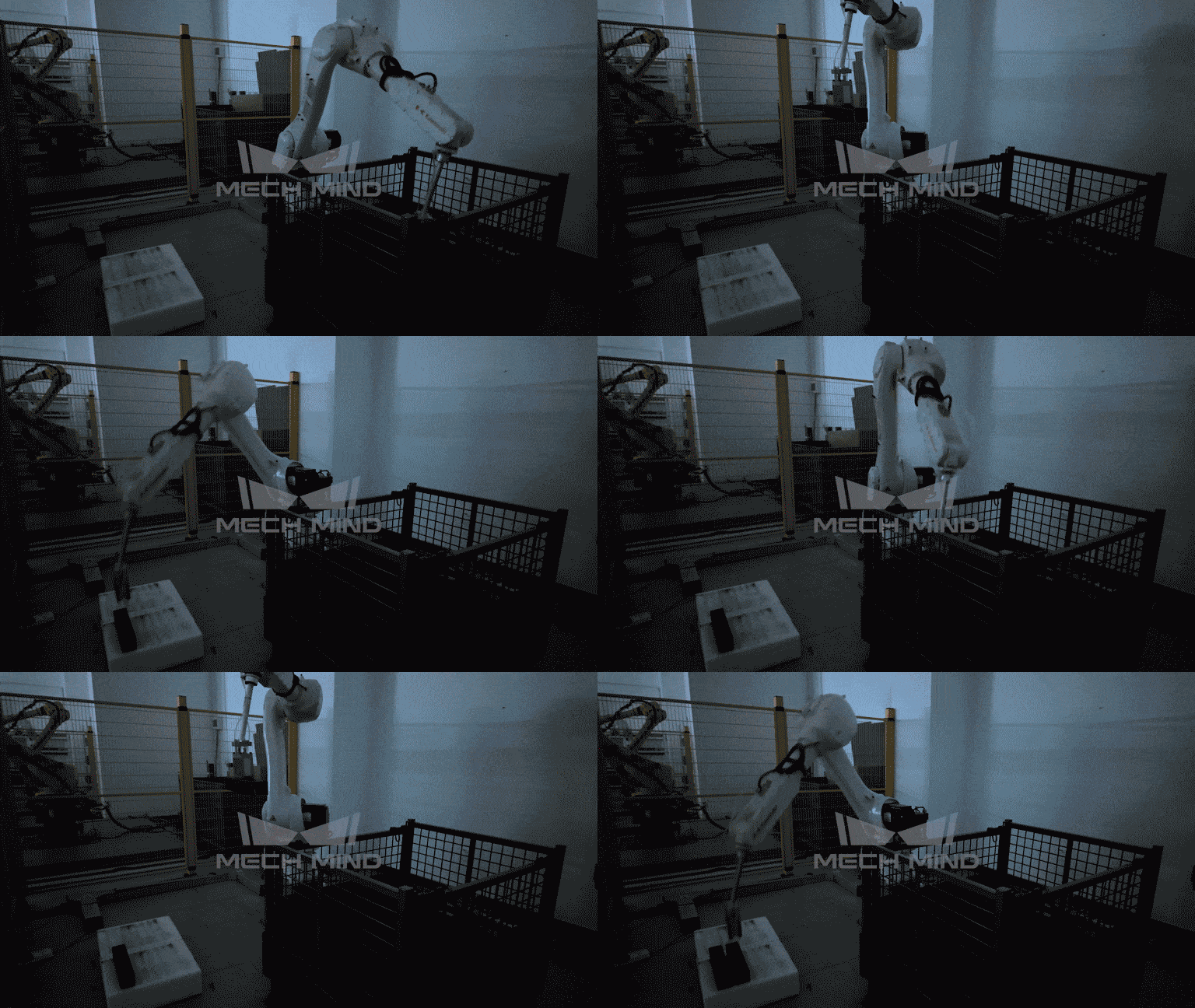
Mech-Mind’s embodied “Eye + Brain” intelligence delivers robust performance even in complete darkness.
A Manufacturing Choice for Long-Term Sustainability
As manufacturing moves toward a greener and more sustainable future, the value of technology lies not only in performance improvements, but also in its ability to consistently reduce resource consumption and environmental impact in real production environments . Mech-Mind continues to focus on advancing robotic capabilities across perception, decision-making, and execution, supporting manufacturers in steadily optimizing energy use and material efficiency .
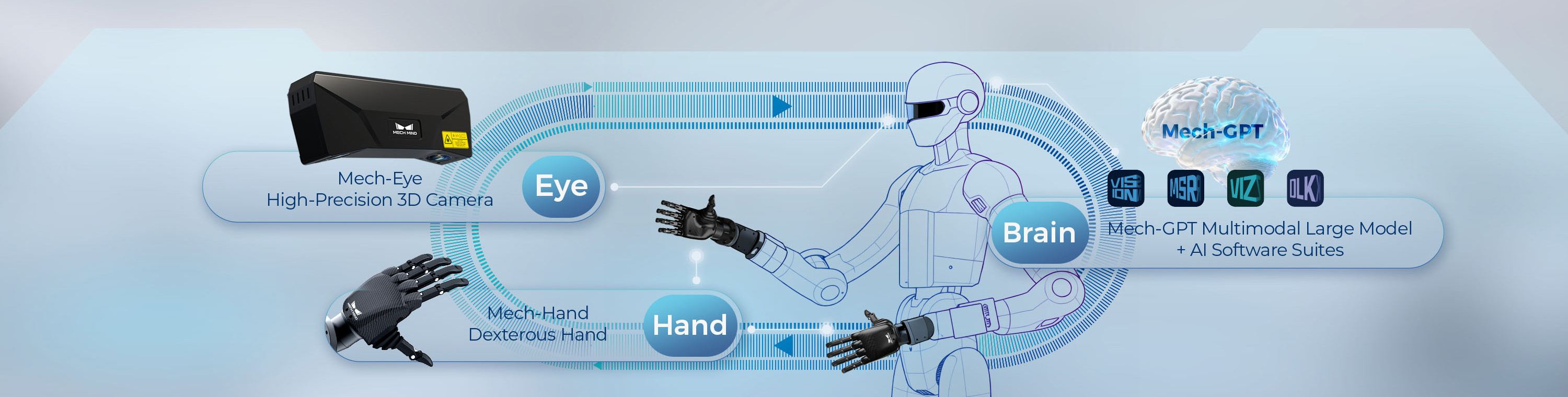
Through close collaboration with manufacturing enterprises and industry partners, Mech-Mind works to identify high-consumption processes, refine system performance during project implementation and technical iteration, and ensure that green manufacturing objectives are effectively realized on the factory floor—moving together toward a lower-carbon and more sustainable manufacturing future .
Recent Posts
Beyond Specifications: How to Choose a Reliable Industrial 3D Vision System
Seeing the Invisible: Why Transparent Objects Are So Hard for Robots
From Challenge to Reliability: Handling Reflective Parts with Mech-Mind “Eye + Brain”
From Factory Floors to Global Lighthouses: 3D Vision's Role in 2026 Industrial Automation Goals
Why Leading Integrators and End-Customers Choose Mech-Mind for Reliable 3D Vision
Recommend Reading
Beyond Specifications: How to Choose a Reliable Industrial 3D Vision System
Selecting the right industrial 3D vision system is not only about comparing camera specifications such as resolution, ac...
Seeing the Invisible: Why Transparent Objects Are So Hard for Robots
Transparent objects seem ordinary in daily life, but for robots, they are some of the most difficult targets to see and...
From Challenge to Reliability: Handling Reflective Parts with Mech-Mind “Eye + Brain”
In real world industrial environments, robotic performance is often affected by changing ambient light, reflective surfa...